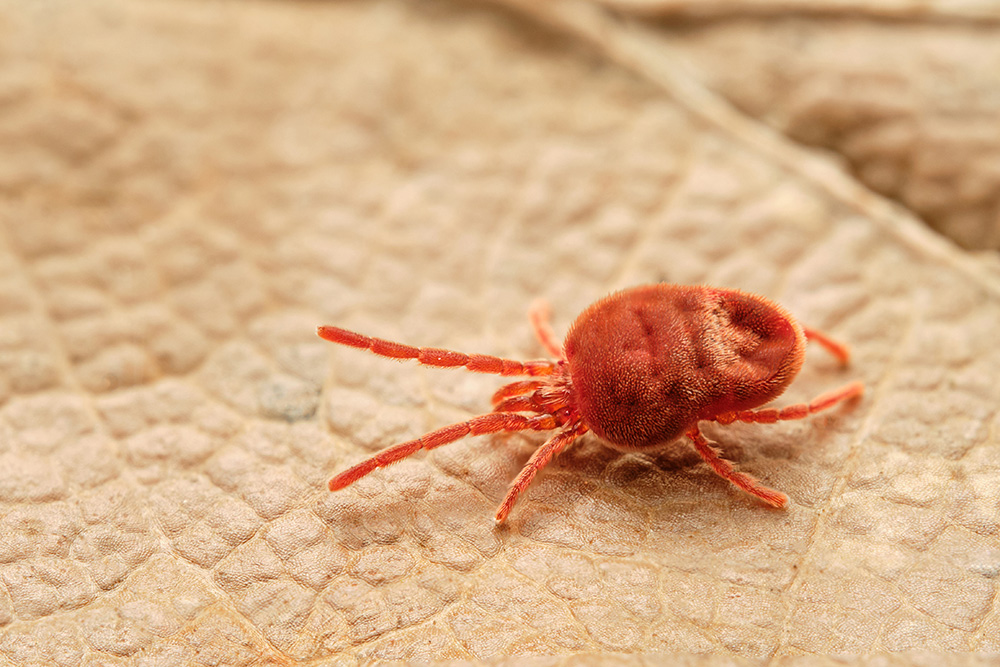
A chigger bite gives you almost no warning. Hours after being in the grass, you simply experience an intense itching, far worse than any mosquito bite.
At Thibodaux Regional Urgent Care, we treat chigger bites all summer, and the good news is that most settle down with simple care at home. Here’s what to do about the itch and when it’s worth coming in to see us.
A closer look at chiggers
Chiggers are the larval stage of a tiny mite, far too small to make out without a magnifying glass. They gather in tall grass, leaf litter and brushy areas, and if you spend time outdoors around here in the warm months, consider yourself in their territory. The summers out here in Louisiana are close to ideal for them.
The itch comes from the way they feed, and it isn’t what most people picture. A chigger doesn’t burrow in or feed on blood. It attaches to the surface of your skin and leaves behind a bit of fluid that irritates the area.
According to the Cleveland Clinic, the chigger doesn’t stay under your skin at all, which is why there’s nothing to dig out once the itching starts. That reaction can linger for days after the chigger has dropped off, which is a big part of why the itch drags on.
Because chiggers gather in the same patches of ground, a lone bite is unusual. You’re far more likely to pick up several at once, right where your clothing fits snugly against your skin.
How chigger bites appear
People mistake chigger bites for mosquito bites constantly, and it’s a simple mistake to make. Both show up as small, red, raised welts that itch, but the giveaway is usually where they land on your body. Chiggers feed where clothing presses against skin, so you’ll often find the bites around your waistband or areas a mosquito probably couldn’t access.
It can be confusing because the redness and swelling aren’t always immediate. Your skin can keep reacting for hours or even days after the chigger has moved on, and the itch peaks around the first or second day.
This is why a bite that worries you should lead to a visit to Thibodaux Regional Urgent Care.
Chigger bites vs. mosquito bites
Mosquito bites start itching within minutes, while chigger bites can take hours before the itch kicks in. In addition, you’ll find mosquito bites spread out on visible skin, while chigger bites group together in the snug areas under your clothes.
Visually, mosquito bites are larger, softer bumps that show up individually. Chigger bites are smaller and firmer, often with a tiny red dot at the center, and they group together rather than scatter. If the pattern fits but you’re still not sure which is what, the location on your body is usually the deciding factor.
How to treat chigger bites at home
Most chigger bites settle down with things you probably already have at home. According to the Cleveland Clinic, a few options that do the work include:
- Applying a cool, damp cloth to the skin for about ten minutes can soothe discomfort without needing medication.
- Try an oatmeal bath; cooler water is better because heat draws blood to the skin, intensifying itching.
- Calamine lotion dabbed onto each bite helps calm the irritated skin while it heals.
The real challenge is not touching the bite. While scratching seems unavoidable, it’s the major factor that transforms a simple bite into something complicated. Broken skin is an open door for bacteria — consider wearing cotton gloves while you sleep to prevent overnight scratching.
Over-the-counter relief options
When it comes to pharmacy options, the two worth picking up are a 1% hydrocortisone cream and an oral antihistamine. The cream goes straight onto the bites and works on the inflammation underneath the itch rather than just the surface sensation — the standard 1% strength is all you need. An oral antihistamine such as Benadryl is especially worth taking at night, when the urge to scratch is hardest to resist.
Home remedies and prevention
If you haven’t showered yet, do that first. Cool water rinses off any chiggers still moving around on your skin and takes some of the immediate sting away.
Going forward, a good insect repellent and keeping your pant legs tucked into your socks go a long way.
When to worry about chigger bites
Usually, the itch is the most bothersome aspect of chigger bites, which typically resolve on their own in one to two weeks. Nevertheless, there are some signs to monitor:
- Pus signals an infected bite that should be treated to prevent spreading.
- A fever with your bites warrants a visit, as it’s not a typical reaction.
- Redness that spreads, resembling an insect sting, needs attention.
Infections resulting from chigger bites almost always trace back to scratching that broke the skin. Short nails and keeping the bite area clean may seem insignificant, but they greatly influence the healing process.
What to expect at urgent care
A visit to Thibodaux Regional Urgent Care for chigger bites usually starts out the same way — we look the area over to rule out any infection and figure out what kind of treatment you need. A prescription antihistamine or topical steroid can move things along considerably faster.
If you’ve been scratching, and your skin is already broken, we may recommend an antibiotic. It helps to have a list of any current medications with you so we can factor those in.
Frequently asked questions
Do chiggers burrow under the skin?
No, but that’s a common myth about them. Chiggers stay on the surface, leaving behind a fluid that your skin reacts to, and that reaction is the itch. It has nothing to do with anything buried under your skin. By the time the itching starts, the chigger itself is usually long gone.
How long do chigger bites last?
Most fade on their own within one to two weeks, with the itch worst around the first or second day and easing from there. The best thing you can do to speed it along is resist scratching, since broken skin can invite an infection and stretch the whole thing out.
Can chigger bites spread from person to person?
No, they are not contagious. You can’t catch them from someone who has them, and they won’t spread across your own skin. The only way to get chiggers is to spend time where they live, out in tall grass and brush.
What is the fastest way to stop chigger bite itching?
Soap, water and a shower as soon as you notice the bites will remove any chiggers still on your skin and take some of the edge off early.
After that, the itch itself is best managed with a 1% hydrocortisone cream applied directly to the bites. If it’s keeping you up at night, that’s when a prescription-strength antihistamine from urgent care is worth considering.
Visit Thibodaux Regional Urgent Care for chigger bite treatment
Chigger bites are miserable, but most of them are very manageable with the right care. Our walk-in clinic in Thibodaux is open seven days a week; no appointment is required. Whether the itch just won’t quit or you’re seeing signs of infection, we’re close by and ready to help you figure out what comes next.
Come see us any day of the week — just walk in.