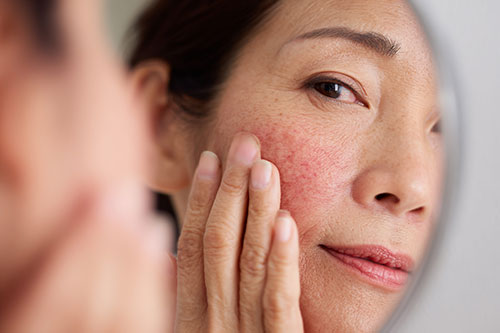
Most people with rosacea get used to managing the condition at home, but flare-ups don’t always follow a predictable pattern. If your rosacea symptoms come on faster than usual, become painful, or interfere with your daily routine, it might be time for a more serious evaluation.
Our providers at Thibodaux Regional Urgent Care are available seven days a week to evaluate skin-related concerns and help you figure out what’s driving your flare and how best to calm it back down.
Understanding rosacea and what can trigger a flare
Rosacea, a persistent inflammatory condition, primarily affects the central facial area, including the cheeks, nose, forehead and chin, though its exact symptoms can vary widely, according to the University of Rochester Medical Center. Some people experience redness and visible vessels, while others struggle with acne-like breakouts, swelling or thickened skin.
Triggers can range from hot weather and spicy foods to stress or alcohol. It’s also possible for flares to arise without an obvious reason at all. Because rosacea can mimic other skin conditions like acne or dermatitis, it’s helpful to have a provider evaluate any sudden changes that you may experience.
Our focus at Thibodaux Regional Urgent Care is on detecting inflammation or infection indicators. That includes questions about new skincare routines, sun exposure or underlying health conditions that could contribute to your symptoms.
When a rosacea flare-up becomes more than a nuisance
Not every flare needs medical treatment, but certain symptoms are worth checking sooner rather than later. The National Rosacea Society says to look for signs of infection, changes in vision or repeated discomfort that’s getting worse over time.
We recommend visiting one of our clinics if:
- The flare came on suddenly and is spreading quickly
- There’s additional pain, swelling or discharge
- Your eye feels irritated and overly sensitive to light
- You’re feeling unwell overall or notice a fever with your symptoms
- The redness or bumps aren’t responding to your usual treatments
If you’ve been using topical medications and notice burning, peeling, or worsening redness, bring that up during your visit. Some treatments can aggravate sensitive skin or trigger new inflammation if not used correctly.
Examining your rosacea flare
At Thibodaux Regional Urgent Care, we’ll start by asking when the flare began, what it felt like at first and how it’s changed. We’ll also ask whether you’ve had similar symptoms before and what you’ve already tried at home.
We may also look at your skin to assess the texture, location and spread of the flare. If your eyes are involved, we’ll check for signs of ocular rosacea, which the Mayo Clinic says can cause serious irritation and dryness around the eyes. If there are concerns about infection, we may look for signs like tenderness or swelling around the affected area.
We’ll also consider whether your symptoms could point to another condition — such as a skin infection, allergic reaction or undiagnosed autoimmune issue — and guide you toward additional care if you need it.
How rosacea flares are typically managed
When it’s clear your symptoms are tied to rosacea, our team will discuss the options for calming the flare and keeping it from worsening. Based on what we find, we might recommend:
- Short-term topical medications to reduce inflammation
- Supportive care to soothe irritated skin and avoid aggravating triggers
- Oral antibiotics if we suspect an infection
While urgent care can’t replace chronic skin care management, it plays a key role when symptoms suddenly change or raise additional concerns. Early action often shortens the duration of a flare and can stop the condition from getting worse.
Thibodaux Regional Urgent Care for rosacea flares
If your rosacea symptoms are getting harder to manage or come with new warning signs, it’s a good idea to get evaluated. At Thibodaux Regional Urgent Care, our providers are here daily to help you understand what’s going on and how to calm your flare.
Visit us at one of our three locations today. You don’t need an appointment to be seen here.