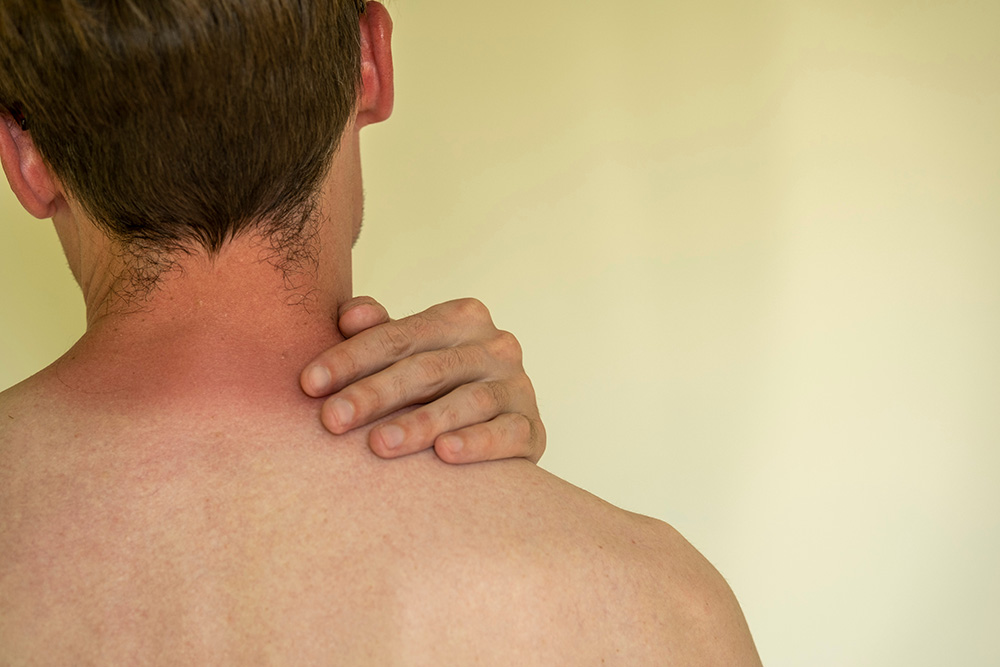
A sun allergy rash — also called polymorphous light eruption (PMLE) — is an immune reaction to UV light that causes itchy bumps or blisters on sun-exposed skin, and it’s far more common than most people realize. A few itchy bumps after an afternoon in the sun are pretty easy to write off as sunburn. A couple of days go by and the redness still hasn’t faded, or worse, it’s popped up somewhere that sunburn has no business being. At that point, a quick Google search starts pulling up terms like “photodermatitis” and “polymorphous light eruption,” neither of which does much to help make sense of what’s actually going on.
Sun allergies are common, and what makes them hard to spot is that they look almost identical to a normal rash. In our experience, it’s also one of the most frequently misdiagnosed skin conditions out there. Sunburn, heat rash and an immune reaction to UV light can all leave your skin red and irritated. Yet each one has a different cause behind it and each one needs to be handled differently.
Sunburn is a direct result of UV damage to your skin cells. Heat rash has nothing to do with UV rays at all. It comes from blocked sweat ducts, and it tends to pop up in skin folds or anywhere that your clothing is trapping moisture against your body. A sun allergy is a whole different situation – it’s your immune system reacting to the sunlight itself. The bumps usually show up on skin that doesn’t see much regular sun exposure and they can develop anywhere from a few minutes to a few hours after you go outside.
The sooner you get a sense of what’s going on with your skin, the sooner you can start doing something about it.
Let’s sort out what’s going on with your skin and when to get help.
Sun Allergies Are Real and Very Common
One of the most common versions is called Polymorphous Light Eruption, or PMLE for short, and it tends to show up as itchy bumps, patches or blisters on any skin that’s had direct sun exposure. The whole reaction can hit within just a few hours of going outside.
PMLE affects anywhere from 10% to 15% of the general population, which is a large portion. Women get it more, and it also shows up more in people who live in northern climates, where intense sun exposure is more seasonal than year-round.
That last point gets at why PMLE works the way it does and why it peaks in the spring and early summer, not because the sun is at its strongest during that time. The reason is that the skin just hasn’t had enough time to slowly build back up a tolerance after months of very little exposure. A single long day outside in April can set off a full reaction that the same amount of sun in August just wouldn’t cause.
This traces back to the immune system. For reasons that haven’t quite been nailed down, the body reads ultraviolet light as a threat and fires up an inflammatory response. And if you’re trying to figure out what your skin is actually reacting to and how to manage it, that difference matters quite a bit.
How to Tell a Rash from Sunburn
Heat rash, sun allergies and sunburns are three separate conditions – and each of them works a little differently on your skin. They’re very easy to mix up, and learning which one you have can save you unnecessary guessing.
Heat rash starts when sweat gets trapped under the skin, and the telltale sign is those small red bumps that usually cluster in the areas where your body holds the most heat. It has no connection to UV exposure or sun damage and it’s just a matter of blocked sweat ducts.
That location detail is worth paying a bit more attention to. A rash tucked under your collar or hidden in a shaded crease is very unlikely to be from sunlight. A rash that maps to where the sun actually hit your skin, though, that’s a more telling sign.
Sunburns work a bit differently. At its core, it’s just UV damage to the skin – direct and physical and not an immune response. The redness and tenderness usually show up within a few hours of exposure and they’ll fade on their own over the next several days. Your body is just working through the aftermath of raw physical injury to the skin.
Not every red patch after a day outside is a sunburn. That assumption can delay figuring out what’s going on with your skin. A rash with bumps, or one that comes back every time the sun hits it, is a sign that something else is at play. The timing of when it first shows up (and the pattern of where it shows up on your body) are your two best starting clues.
Signs You Should Not Ignore
Most sun rashes are uncomfortable. But they’re also pretty harmless and they’ll usually fade on their own within a day or two. A little rest, some shade and maybe a cool compress are usually all that it takes to get back to feeling like yourself again.
What you want to watch for are the signs that something worse is going on. A rash that develops blisters is one of the bigger ones. Once it’s reached that point, don’t wait around to get it looked at.
Watch for where the rash is spreading and whether it’s moving into areas that were covered. A rash that starts on sun-exposed skin and then spreads into those covered areas is telling you something. That pattern is less about surface irritation and more about an internal reaction.
Some of the symptoms aren’t about your skin at all. Dizziness, nausea or any difficulty breathing on top of a skin reaction – those are not “wait and see” symptoms. That combination means that it’s time to walk into urgent care.
Medications That Trigger Sun Sensitivity
Before you blame the sun for your latest skin flare-up, it’s probably worth taking a look at what’s in your medicine cabinet. Some of the most common medications that you take every day can give you a pretty nasty reaction when your skin gets exposed to sunlight and you might never make that connection.
Antibiotics like doxycycline are probably the most talked-about example of this. Diuretics (the water pills prescribed for blood pressure and swelling) are another common one. Even ibuprofen, the painkiller that most of us keep somewhere in the cabinet, has documented links to sun-related skin reactions.
A drug reaction and a sun allergy are two very different conditions. What’s actually going on is a chemical reaction between the medication and UV light, which is a big reason why it gets misidentified and why so many assume something else is wrong with their skin.
If your skin has been acting up, it’s worth pulling out the information sheet for any medications that you’re currently on, instead of assuming it’s a chronic condition. Drug inserts and most pharmacist resources will list photosensitivity as a possible side effect if that medication is known for it. The reaction itself tends to look quite like a rash or a mild sunburn, and since it only shows up on the parts of your skin that were exposed to the sun, the link to a pill that you’ve been taking for weeks can be pretty hard to place.
Everyday Ways to Protect Your Skin
For anyone who’s ever had a rough day in the sun, a little preparation matters. Broad-spectrum sunscreen rated SPF 30 or higher is a great place to start, but it works much better if you wear it alongside UV-protective clothing instead of using it as your only line of defense. Sunscreen has its limits. Dense fabrics give you an extra layer of protection that no SPF number can replicate on its own, and that matters.
Full sun avoidance is sometimes the wrong call – and for some with skin conditions, it can make matters worse. With a condition called polymorphous light eruption (PMLE), doctors will sometimes skip that strategy and recommend that patients slowly increase their sun exposure instead. The usual plan starts with very short stretches outside and can then slowly add a bit more over the course of a few weeks. Over time, the skin can build up some tolerance, which tends to make day-to-day outdoor time more comfortable.
Small habit changes can add up to quite a bit over time. A wide-brimmed hat, long sleeves in a lightweight breathable fabric and a decent sunscreen practice can turn your time outside from draining and uncomfortable into something more predictable. All any of these need is a little consistency to actually stick.
A quick reminder that these protective habits are a starting point. But none of them are a substitute for medical advice. If your skin continues to respond regardless of what you do, it’s worth a visit to urgent care. There may be an underlying issue that a hat and a strong SPF number just aren’t going to help with on their own.
Here for You When You Need Us
Skin reactions after time in the sun don’t always fit neatly into one category, and that’s okay. The bigger point to know is that a mild irritation and a full-blown immune response to UV light are two very different reactions. That distinction matters quite a bit for how you take care of yourself. Whether it turns out to be a plain old sunburn, a side effect from a medication or something closer to a photoallergic reaction, that answer shapes everything about what you do next.
A visit to urgent care is the faster way to actually know what’s going on and start to feel better. At some point, it will just be more stressful to sit with the uncertainty than to go in and find out.
Thibodaux Regional Urgent Care is here for you and your family whenever life doesn’t go as planned. With locations in Thibodaux, Houma and Gray and with doors open every day of the week, a nearby option is never far if you ever need one. No appointment is needed – just walk in at any time and our team will take great care of you from there. Come in and see us soon!