Most cold sores heal on their own, but the stage you’re in decides what helps and how careful you need to be. Catching one early gives treatment its best shot at shortening the outbreak.
If you feel one coming on, Thibodaux Regional Urgent Care welcomes walk-ins every day, so you can get it looked at without waiting for an appointment.
What are cold sores?
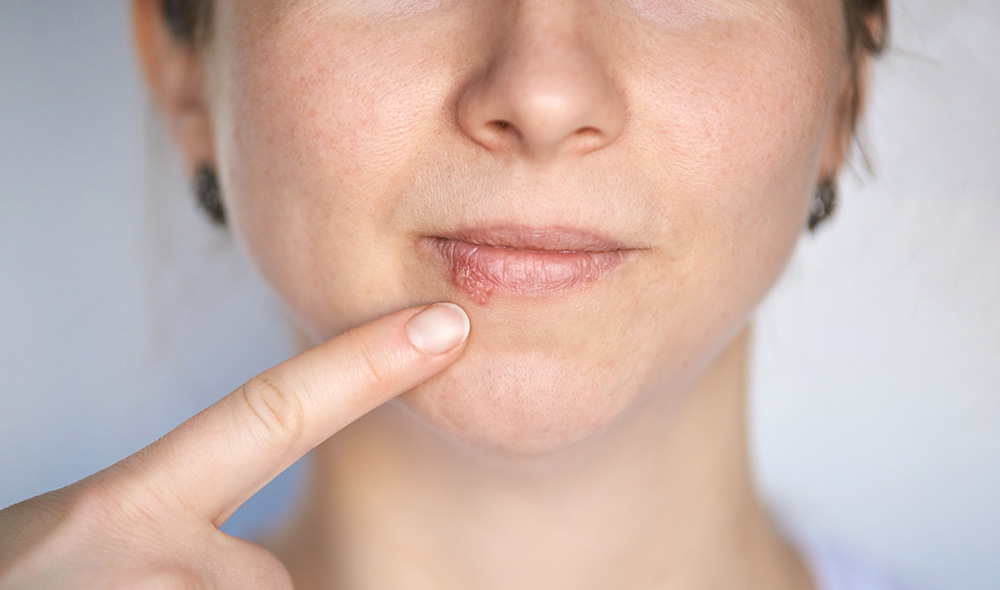
Cold sores, also called fever blisters, are small, painful blisters on or around your lips. They’re caused by the herpes simplex virus, usually type 1 (HSV-1), which is extremely common, according to the CDC. Carrying it is nothing to be embarrassed about.
Once you have the virus, it stays in your body for life, resting in your nerve cells between outbreaks. When something wakes it up, it travels back along the nerve to your skin, which is why cold sores often return to the same spot.
Cold sore stages explained
Cold sores usually move through five stages. The timing varies from person to person, and first outbreaks are often the worst.
Stage 1: Itching and burning
Before anything shows up, your lip may itch, burn or feel tight and tender. Think of this as your early warning sign. Some people never notice this stage.
Stage 2: Blistering
A day or so later, a group of small, fluid-filled blisters forms, usually along the edge of your lip. The surrounding skin may turn red and puffy, making eating or even smiling painful.
Stage 3: Weeping
Next, the blisters break open and ooze clear fluid, leaving a shallow, painful sore. That fluid carries the virus, which makes this the most contagious stage. As itchy as it gets, don’t pick or pop the sore. Doing so can spread the virus to your eyes or other people and slow healing.
Stage 4: Crusting
The sore dries into a yellow or brown crust, then hardens into a scab that may crack or sting as your lip moves. A lip balm used only on the sore can keep it from splitting, as long as you throw away the tube once you’ve healed.
Stage 5: Healing
The scab peels off, occasionally revealing pink skin that fades gradually. Cold sores usually heal without leaving a scar behind.
How cold sores spread
HSV-1 passes from person to person through saliva and skin-to-skin contact. You’re contagious from the first warning signs until the sore has fully healed. The virus can spread even without a visible sore, although this is less probable.
You can protect the people around you by:
- Skipping kisses and other mouth-to-skin contact
- Using your own lip balm, cups, utensils and towels
- Washing your hands after touching the sore or applying cream
- Keeping your hands away from your eyes
What triggers cold sore outbreaks?
Once you’re carrying the virus, everyday things can bring on an outbreak. Some of the most common culprits are sun exposure, stress, fatigue, hormonal changes and chapped or injured lips. A fever or cold can trigger one too, which is how fever blisters got their name.
If the sun is one of your triggers, the American Academy of Dermatology recommends wearing a lip balm with SPF 30 or higher all year.
Cold sore treatment options
You’ll get the most out of treatment if you start at the first itch or burn. Once a blister has formed, treatment mostly keeps you comfortable while the sore heals.
Prescription antivirals
Prescription antivirals slow the virus so it can’t multiply as easily. You can take them as pills, such as valacyclovir, acyclovir and famciclovir, or apply them as creams. They won’t cure HSV-1, but starting them early can make an outbreak shorter and easier to get through.
If you get cold sores often, ask us about keeping a prescription on hand so you can start it at the first sign.
Over the counter and home care
If you prefer to start with a pharmacy option, choose a cream that may slightly reduce healing time when applied promptly. A cool, moist cloth helps reduce your swelling, and acetaminophen, ibuprofen or a numbing gel can relieve the soreness.
Lysine supplements are popular, but the evidence behind them is thin. Skip harsh products like hydrogen peroxide or rubbing alcohol, which irritate the skin and can slow healing.
When to see a provider for a cold sore
The American Academy of Dermatology also recommends getting checked if you:
- Have a sore near your eye
- Have several sores or a lot of pain
- Have a sore that lasts longer than two weeks
- Get cold sores six or more times a year
- Have eczema
- Have a weakened immune system, for example, from cancer treatment or HIV
Don’t wait on a sore near your eye, since HSV-1 can infect the eye and damage your vision if the infection goes untreated. If you notice eye pain, redness or sensitivity to light, come to Thibodaux Regional Urgent Care the same day. Blurry vision or severe eye pain calls for the emergency room.
Herpes can be serious for newborns, so don’t kiss a baby while you have a cold sore. If an infant develops a sore, fever, trouble feeding or unusual sleepiness after being around someone with one, bring the baby to us right away.
Go to the emergency room right away if a baby less than 3 months old has a fever.
Frequently asked questions
How long does a cold sore last?
A cold sore will usually heal in about one or two weeks.
What’s the difference between a cold sore and a canker sore?
Cold sores form on or around the lips, come from HSV-1 and are contagious. Canker sores form inside your mouth, on your gums, cheeks or tongue.
Is it a cold sore or a pimple?
A cold sore usually announces itself with itching or burning, then forms tiny blisters right on the edge of your lip. A pimple typically shows up as a single bump with a white head, more often near the lip than on it.
Can I go to work or school with a cold sore?
Yes, provided you don’t touch the sore and avoid sharing items.
Can urgent care prescribe antiviral medication for cold sores?
Yes, at Thibodaux Regional Urgent Care, we can confirm whether it’s a cold sore and prescribe an antiviral if it’s right for you.
Walk-in cold sore care at Thibodaux Regional Urgent Care
Our Thibodaux team can tell you for sure what you’re dealing with and get treatment started while it can still make a difference. Come in at the first sign of a cold sore, or anytime one is slow to heal or keeps coming back.
Walk in any day from 6 a.m. to 10 p.m. at 2031 Audubon Ave. in Thibodaux, or call 985-803-8383.